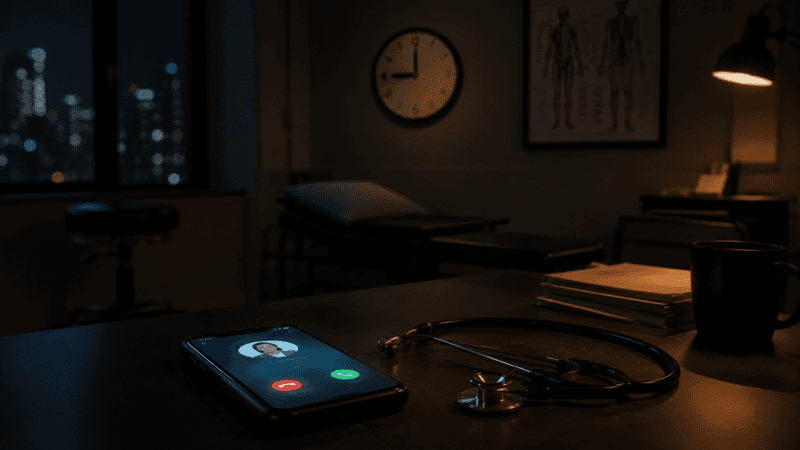
Between 60–70% of patient inquiries happen outside traditional business hours. A parent with a child's high fever calls at 9 PM. Someone experiencing persistent chest tightness calls on Saturday morning. New patients researching clinics browse and call on Sunday evenings. Every one of these calls currently goes to voicemail or an answering service that takes a message and promises a callback "on the next business day."
The After-Hours Triage Problem
Traditional answering services treat every call the same: take a name, number, and message. But a patient with chest pain and shortness of breath needs immediate guidance (call 911, proceed to the ER). A patient with a low-grade fever and sore throat needs reassurance and a next-day appointment. A new patient asking about your providers needs scheduling. These three calls require completely different responses — and an answering service gives them all the same one.
The On-Call Provider Problem
Most medical clinics route after-hours calls to an on-call physician or nurse — which means the provider gets woken up at midnight for a patient who just wants to know your hours. AI triage separates true emergencies from routine inquiries, so the on-call provider only gets contacted when clinical judgment is actually needed.
How AI Triage Works for Medical Clinics
AI uses your clinic's custom triage protocols to categorize every after-hours call into one of three tiers:
- Tier 1 — True Emergency: Chest pain, difficulty breathing, signs of stroke, severe allergic reaction, uncontrolled bleeding. AI instructs the patient to call 911 immediately, provides your emergency contact information, and sends an urgent notification to the on-call provider.
- Tier 2 — Urgent, Non-Emergency: High fever unresponsive to medication, moderate injury, worsening symptoms from a known condition, medication reaction concerns. AI provides comfort care guidance per your protocols, books the first available same-day or next-day slot, and sends the on-call provider a notification (no callback required unless they choose to).
- Tier 3 — Routine: New patient inquiries, scheduling requests, insurance questions, prescription refill requests, mild symptoms. AI handles these completely — answers questions, books appointments, and captures patient information without involving anyone on your team.
In a typical medical clinic, 70% of after-hours calls are Tier 3 (routine), 25% are Tier 2 (urgent but manageable), and only 5% are Tier 1 (true emergencies). AI handles 95% of after-hours volume without disturbing your on-call provider.
Instant Response Changes Everything
AI triage eliminates the after-hours gap entirely. The parent with a child's high fever gets guidance on when to seek emergency care versus scheduling a morning appointment. The new patient browsing at 10 PM gets their questions answered and an appointment booked. The patient with a medication concern gets appropriate next steps and a provider follow-up scheduled. Every caller gets exactly the response their situation requires — instantly, at any hour, without a single person on your team picking up the phone.
The result is fewer unnecessary ER visits, better clinical outcomes for truly urgent situations, happier on-call providers, and a dramatic increase in captured new patients who would have otherwise called the clinic down the street.